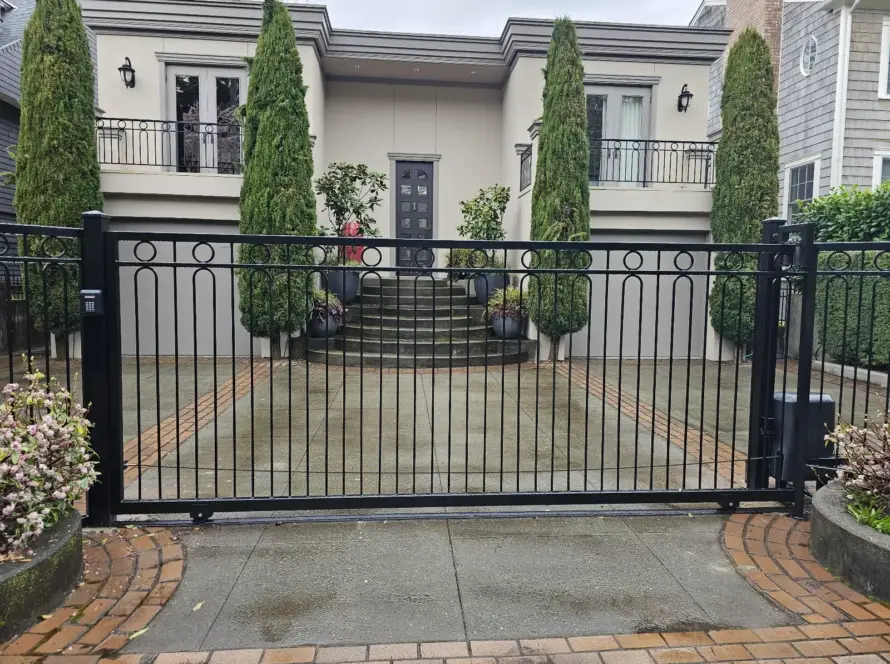
An automatic gate is only as reliable as the system that operates it.
The gate itself provides the physical entry point, while the gate operator supplies the powered movement that opens and closes it. Depending on the property, the operator can also work alongside access-control equipment such as keypads, remote controls, card readers, or sensors.
For homeowners and businesses considering gate operator installation in Morgan County, Alabama, choosing the right operator requires more than selecting a motor.
The operator needs to match the gate configuration, expected use, available space, access requirements, and overall installation.
Kelley Fence & Gates currently provides gate and operator installation as part of its gate services and specifically identifies automatic operators for both swing and sliding gates. Its current service page also describes access-control options and a consultation, installation, and testing process.
This guide explains what property owners should know before installing or upgrading a gate operator.
What Is a Gate Operator?
A gate operator is the powered mechanism that moves an automatic gate.
Instead of manually opening and closing the gate, the operator uses an electric-powered system to move the gate according to the selected configuration.
The operator can be controlled through compatible access devices, which may include:
- Remote controls
- Keypads
- Card readers
- Sensors
- Other access-control equipment
The exact equipment depends on the gate and property.
A swing gate requires a different operating configuration from a sliding gate, so the operator should be selected as part of the complete gate system rather than as an isolated component.
Gate Operator vs. Gate Opener: Is There a Difference?
You may hear terms such as:
- Gate operator
- Gate opener
- Automatic gate opener
- Gate automation system
These terms are often used interchangeably in consumer searches.
In professional gate installation, gate operator is commonly used to describe the powered equipment that moves the gate.
For SEO and customer communication, Kelley can naturally use both terminology:
gate operator installation
and:
automatic gate opener installation
while keeping the service technically accurate.
The important point is that the equipment must be compatible with the gate and intended application.
What Types of Gate Operators Are Available?
The appropriate operator depends primarily on the type of gate being automated.
The two major configurations Kelley currently identifies are:
- Swing gate operators
- Sliding gate operators
Swing Gate Operators
A swing gate operator moves the gate around its hinges.
This type of system may be appropriate when the property has enough room for the gate to swing through its opening.
Before choosing a swing operator, consider:
- Gate size
- Gate weight
- Available swing clearance
- Driveway configuration
- Terrain
- Expected usage
- Gate design
A property with limited clearance may require a different solution.
Sliding Gate Operators
A sliding gate operator moves the gate horizontally instead of swinging it open.
Sliding systems can be useful when there isn’t sufficient room for a gate to swing into or across the driveway.
However, the property needs enough space alongside the gate for the gate to travel.
Important considerations include:
- Available side clearance
- Gate length
- Gate weight
- Surface conditions
- Gate track or supporting hardware
- Expected traffic
- Operator location
Kelley Fence & Gates currently identifies sliding gates and sliding-gate operators among its available gate services.
How Do You Choose the Right Gate Operator?
The right operator depends on the complete project.
A professional should evaluate several factors before recommending equipment.
1. Gate Type
First determine whether the gate is:
- Swinging
- Sliding
- Another specialized configuration
The operator needs to match the movement of the gate.
2. Gate Size and Weight
The operator must be appropriate for the physical characteristics of the gate.
A large, heavy gate places different demands on the operating system than a small residential gate.
3. Frequency of Use
How often will the gate open and close?
A private driveway may have relatively limited daily use.
A commercial entrance may experience substantially more traffic.
The expected operating frequency should be considered when selecting equipment.
4. Property Layout
Available clearance, terrain, driveway configuration, and surrounding structures can all influence the appropriate system.
5. Access Control
Consider how authorized users should open the gate.
Options may include:
- Remote controls
- Keypads
- Card readers
- Sensors
- Other compatible access-control systems
6. Safety Requirements
The operator and gate should be designed and installed with appropriate safety features.
The exact configuration depends on the equipment and project.
Residential Gate Operator Installation
For a residential property, the most common application may be an automated driveway gate.
Homeowners may want automation for:
- Convenience
- Controlled driveway access
- Privacy
- Property security
- Easier vehicle entry and exit
A remote-controlled gate can eliminate the need to manually open a large driveway gate.
A keypad can also provide an alternative method of entry for authorized users.
Kelley Fence & Gates currently offers residential gate installation and automated gate systems as part of its fencing and gate services.
Commercial Gate Operator Installation
Commercial properties often require a different approach.
A business may need to control access for:
- Employees
- Vendors
- Delivery vehicles
- Customers
- Service vehicles
- Authorized personnel
In these situations, the gate operator becomes part of a larger access-control system.
The local North Alabama market already includes companies specifically targeting commercial gate operators and access-control applications, including installations for high-traffic commercial properties.
That makes commercial gate automation a meaningful specialized opportunity for Kelley if the business wants to expand this service line.
For a commercial project, discuss:
- Expected traffic volume
- Gate size
- Vehicle types
- Access-control requirements
- Operating schedule
- Safety considerations
- Future system expansion
What Access-Control Options Can Work With a Gate Operator?
The operator moves the gate.
The access-control system determines who can tell it to open.
Remote Controls
Remote controls can provide straightforward vehicle access for residential properties and other applications.
Keypads
A keypad can allow authorized users to enter a programmed access code.
This can be useful when multiple people need access without distributing individual remote controls.
Card Readers
Card readers can provide a more structured access method for certain commercial environments.
Vehicle Detection and Sensors
Sensors can be incorporated into some gate systems depending on the property and equipment.
The appropriate configuration should be determined during the design stage.
Kelley currently identifies keypads, card readers, remote controls, and sensor-based access among its gate-system options.
Can an Existing Gate Be Automated?
Sometimes.
If you already have a manually operated gate, it may be possible to upgrade it with an operator.
However, automation should not be assumed to be compatible with every existing gate.
The gate may need to be evaluated for:
- Structural condition
- Weight
- Alignment
- Hardware
- Hinges or rollers
- Available clearance
- Gate movement
- Operator mounting requirements
If the existing gate is damaged, poorly aligned, or structurally unsuitable, repairing or replacing the gate may be necessary before automation.
The goal should be a properly functioning system rather than simply attaching an operator to an unsuitable gate.
Signs an Existing Gate Operator May Need Repair or Replacement
A gate operator doesn’t necessarily need replacement simply because it isn’t working correctly.
The first step is identifying the problem.
Possible warning signs include:
- Gate movement becoming slow
- Unusual sounds
- Gate stopping unexpectedly
- Gate failing to open
- Gate failing to close
- Remote-control problems
- Access-control problems
- Uneven gate movement
- Operator repeatedly struggling
- Visible damage
Some problems may involve the gate itself rather than the operator.
For example, a misaligned gate can place unnecessary strain on an operator.
That is why diagnosing the complete system is important.
Kelley Fence & Gates’ current service offering includes gate operator installation and repair.
Why Professional Gate Operator Installation Matters
Installing an automatic gate operator isn’t simply a matter of mounting a motor and connecting a control.
The operator, gate, hardware, controls, and safety components need to work together.
Kelley Fence & Gates describes its current gate installation process as:
- Consultation and design
- Tailored installation planning
- Expert installation
- Final inspection and testing
That type of process matters because problems with one part of the system can affect the performance of the others.
For example:
Gate alignment → operator load → movement → access control → overall reliability
A professional evaluation helps identify these relationships before installation is complete.
Gate Operator Installation Process
Although every project is different, a professional installation generally follows a sequence similar to this.
Step 1: Property Evaluation
The contractor evaluates the gate, opening, driveway, surrounding space, and intended use.
Step 2: Determine Gate Configuration
The project is evaluated to determine whether a swing or sliding system is appropriate.
Step 3: Select the Operator
The operator should be compatible with the gate and expected usage.
Step 4: Plan Access Control
Determine whether the property needs:
- Remotes
- Keypads
- Card readers
- Sensors
- Other access controls
Step 5: Prepare the Installation Area
The installation area is prepared for the operator and related equipment.
Step 6: Install the Operator
The operator and required components are installed according to the system’s requirements.
Step 7: Configure Controls
Access-control devices are configured and tested.
Step 8: Test the Complete System
The gate should be tested through its operating range to verify proper movement and system response.
Kelley specifically states that its gate installation process includes final inspection and testing of the gate and operator.
What About Underground Utilities?
Any project involving excavation should account for underground utilities before digging.
If the gate operator installation requires excavation, electrical work, posts, or other ground work, the property owner and contractor should follow applicable utility-location requirements.
For Alabama projects involving digging, Alabama 811 provides the state’s utility-locate service and advises property owners and contractors to submit a locate request before excavation.
This is particularly relevant when installing new gate posts, foundations, or related equipment.
How Much Does Gate Operator Installation Cost?
There is no universal price for gate operator installation.
The total project cost can vary according to:
- Gate type
- Gate size
- Gate weight
- Operator type
- Existing gate condition
- New vs. existing gate
- Electrical requirements
- Access-control equipment
- Site conditions
- Installation complexity
- Commercial vs. residential use
For example, automating an existing small residential swing gate is a very different project from installing a new commercial sliding gate with controlled access.
A property-specific evaluation is therefore more useful than relying on a generic online price.
How Long Does Gate Operator Installation Take?
Installation time depends on the project.
Factors can include:
- Existing gate condition
- New gate vs. existing gate
- Gate size
- Operator type
- Electrical work
- Access-control equipment
- Site preparation
- Custom fabrication
- Commercial requirements
A straightforward project may be substantially different from a complex commercial installation.
The contractor should provide a project-specific schedule after evaluating the property.
Gate Operator Maintenance
Automatic gate systems contain moving parts and powered equipment, so appropriate maintenance can help identify problems before they become larger issues.
Property owners should pay attention to changes such as:
- Increased noise
- Slower operation
- Uneven movement
- Repeated stopping
- Hardware problems
- Remote-control failures
- Sensor issues
- Visible wear or damage
A gate that suddenly begins operating differently should be evaluated rather than repeatedly forced to operate.
Maintenance requirements will depend on the specific operator and gate system.
Gate Operator Installation in Morgan County, AL
Choosing a gate operator should start with the property and the gate—not the motor.
The right system depends on:
- Gate configuration
- Gate size and weight
- Property layout
- Available clearance
- Operating frequency
- Residential or commercial use
- Access-control requirements
- Safety considerations
- Existing gate condition
Kelley Fence & Gates currently provides gate and operator installation in Morgan County and surrounding areas, with services covering automated gates, swing and sliding gates, operators, and access-control options.
If you’re considering a new automatic gate or want to automate an existing gate, a professional evaluation can help determine whether the current gate is suitable and what type of operator system fits the property.
Explore Kelley Fence & Gates’ Gate Installation Service
Frequently Asked Questions
What is a gate operator?
A gate operator is the powered equipment that opens and closes an automatic gate.
Is a gate operator the same as a gate opener?
The terms are often used interchangeably in consumer searches. In professional gate work, “gate operator” commonly refers to the powered mechanism that moves the gate.
What type of operator does a swing gate need?
A swing gate requires an operator designed for swing-gate movement. The correct equipment depends on the gate’s size, weight, configuration, and expected use.
What type of operator does a sliding gate need?
A sliding gate requires an operator designed to move the gate horizontally. Available space, gate weight, operating frequency, and the gate’s hardware all need to be considered.
Can I add an operator to an existing gate?
Possibly. The existing gate should first be evaluated for structural condition, alignment, weight, hardware, clearance, and compatibility with the proposed operator.
Can a gate operator use a keypad?
Yes. A compatible automatic gate system can incorporate keypad access. Kelley Fence & Gates currently identifies keypad access among its available gate-system options.
Can a gate operator use a remote?
Yes. Remote controls are one of the access options identified by Kelley Fence & Gates for its automated gate systems.
Are gate operators useful for commercial properties?
Yes. Commercial properties can use gate operators as part of controlled vehicle access and broader property-security systems. The operator should be selected around the expected traffic and access requirements.
How much does gate operator installation cost?
Cost varies based on the gate, operator, access controls, site conditions, electrical requirements, and installation complexity. A property-specific estimate is the best way to determine project cost.
Does Kelley Fence & Gates install gate operators?
Yes. Kelley Fence & Gates currently lists gate operator installation and repair among its services. Its website also describes installation of automatic operators for swing and sliding gates.
Planning a Gate Automation Project?
A reliable automatic gate begins with the right combination of gate, operator, access control, and installation.
Whether you’re automating a residential driveway or planning controlled access for a business property, the system should be selected around how the gate will actually be used.
Kelley Fence & Gates can evaluate your gate project in Morgan County and surrounding areas and help determine an appropriate gate and operator solution.